
If you’re planning to add a fence to your Northridge or San Fernando Valley home, you’ve likely already narrowed it down to two popular options: vinyl or wood. Both look great, both offer privacy — but they perform very differently in Southern California’s climate, and the right choice depends on your priorities.
At GN Builders, we’ve installed hundreds of fences across Northridge, Chatsworth, Granada Hills, and the greater Los Angeles area. In this guide, we break down everything you need to know to make the right decision for your home.
The Southern California Factor
Before comparing materials, it’s worth understanding how LA’s climate affects fencing. Northridge and the San Fernando Valley experience:
- Hot, dry summers with temperatures regularly above 100°F
- Low humidity for most of the year
- Santa Ana winds that put stress on fence panels and posts
- Occasional heavy rain during winter months
- Strong UV exposure year-round
These conditions affect wood and vinyl very differently — and it’s one of the biggest reasons many LA homeowners have switched to vinyl in recent years.
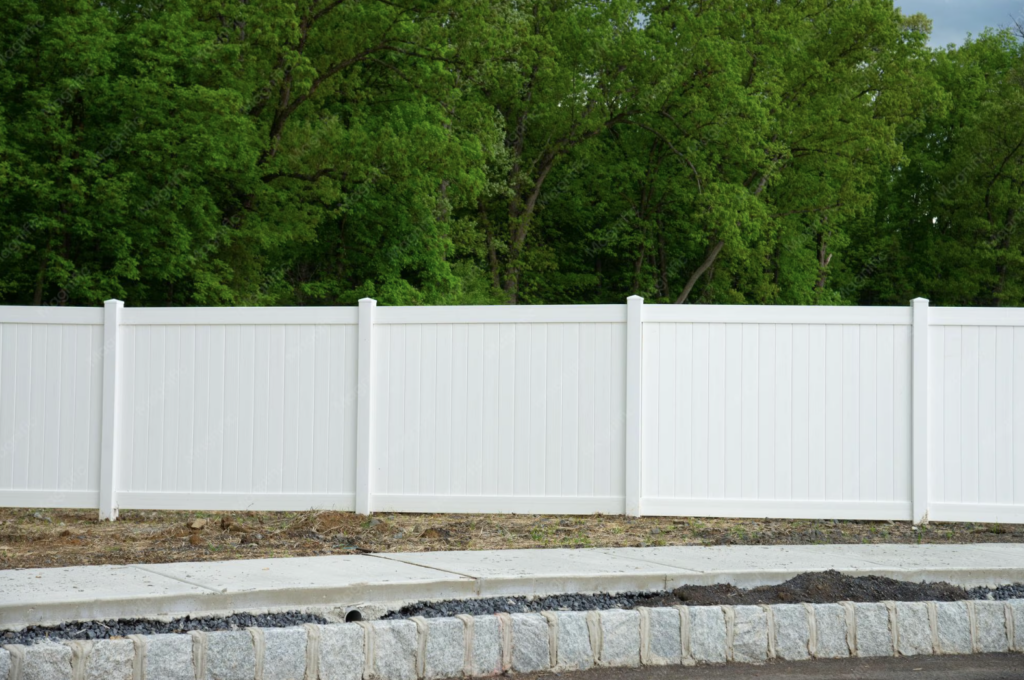
Wood Fence: Classic Look, Higher Maintenance
Wood fencing — typically cedar or redwood in California — has been the traditional choice for decades. Here’s an honest look at the pros and cons.
Pros of Wood Fence
Natural appearance. Nothing looks quite like real wood. A fresh cedar fence has warmth and character that many homeowners love, and it blends naturally with landscaping and garden settings.
Customizable. Wood can be cut, shaped, and painted or stained in any color. If you want a unique design — a scalloped top, a diagonal pattern, a custom height — wood gives you that flexibility.
Lower upfront cost. A wood fence typically costs less per linear foot to install than vinyl, making it attractive if you’re working with a tighter budget.
Easy to repair. If one or two boards get damaged, you can replace just those boards without removing the entire section.
Cons of Wood Fence
High maintenance in LA’s climate. This is where wood struggles in Southern California. The combination of intense UV rays, dry heat, and occasional rain causes wood to warp, crack, splinter, and fade faster than in milder climates. Without regular sealing or staining — typically every 2–3 years — a wood fence deteriorates quickly.
Susceptible to pests. Termites are a real concern in the San Fernando Valley. A wood fence in contact with soil is vulnerable, and treatment adds ongoing cost.
Shorter lifespan. A well-maintained wood fence lasts 10–15 years in Southern California. Without maintenance, you may be replacing sections in 5–7 years.
Fading and discoloration. UV exposure grays and bleaches untreated wood within a single season, which many homeowners find unattractive.
Vinyl Fence: Low Maintenance, Long-Lasting
Vinyl (PVC) fencing has become the most popular choice for LA homeowners over the last decade — and for good reason.
Pros of Vinyl Fence
No maintenance required. This is the biggest advantage. Vinyl doesn’t rot, warp, crack, splinter, or fade in UV light. You never need to paint, stain, or seal it. An occasional rinse with a garden hose keeps it looking new.
Excellent durability in SoCal climate. High-quality vinyl is designed to withstand UV rays, heat, and moisture without degrading. In Southern California’s climate, vinyl consistently outperforms wood over time.
Long lifespan. A quality vinyl fence lasts 20–30 years or more with virtually no upkeep. Over the life of the fence, the total cost of ownership is often lower than wood once you factor in maintenance.
Pest and moisture resistant. Vinyl doesn’t attract termites and won’t rot if it gets wet — a significant advantage over wood.
Consistent appearance. Vinyl holds its color and finish year after year. No graying, no peeling, no weathering.
Clean, modern look. Vinyl fences are available in white, tan, gray, and other colors, and in multiple styles: privacy panels, picket, ranch rail, and more.
Cons of Vinyl Fence
Higher upfront cost. Vinyl costs more per linear foot than wood for both materials and installation. The investment pays off over time, but the initial price is higher.
Harder to repair individual sections. If a panel cracks or breaks, replacing it requires matching the exact style and color, which can be tricky with older fences.
Less customizable. Vinyl comes in standard sizes and colors. If you want a truly custom shape or a specific painted color, wood offers more flexibility.
Can look less natural. Some homeowners feel vinyl doesn’t have the organic warmth of real wood — it’s a matter of personal preference.
Side-by-Side Comparison
| Wood Fence | Vinyl Fence | |
|---|---|---|
| Upfront cost (installed) | $20–$35/linear ft | $30–$50/linear ft |
| Lifespan in SoCal | 10–15 years | 20–30+ years |
| Maintenance | Every 2–3 years | Almost none |
| UV resistance | Poor | Excellent |
| Termite resistance | Poor | Excellent |
| Appearance | Natural/warm | Clean/modern |
| Customization | High | Moderate |
| Repair | Easy | Moderate |
| Long-term value | Lower | Higher |
Which Is Right for Your Home?
Choose wood if:
- You love the natural look and are willing to maintain it
- You have a tighter upfront budget
- You want a custom design or specific paint color
- You’re planning to sell your home in the next few years and want curb appeal at lower cost
Choose vinyl if:
- You want a set-it-and-forget-it fence with no ongoing maintenance
- You live in a hot, sunny area of the San Fernando Valley (most of Northridge qualifies)
- You’re concerned about termites
- You want the best long-term value
- You have a pool area or irrigated garden where moisture is a factor
For most Northridge homeowners, vinyl is the smarter long-term investment — especially given our climate. The higher upfront cost is offset by zero maintenance expenses and a lifespan that’s twice as long as wood.
What About Wrought Iron or Block Wall?
These are two other popular options in the San Fernando Valley worth mentioning briefly:
Wrought Iron — Excellent durability and a classic LA aesthetic, especially for front yard fencing. Higher cost, requires occasional painting to prevent rust, but lasts decades. GN Builders offers custom wrought iron work for gates and fencing.
Block Wall (CMU) — The most permanent and durable option. Provides full privacy and sound reduction. Significantly higher cost, but essentially maintenance-free and lasts the life of the home.
GN Builders: Vinyl & Wood Fence Installation in Northridge
GN Builders is a licensed general contractor (CSLB Lic #1134674) serving Northridge, Chatsworth, Granada Hills, Canoga Park, Reseda, Van Nuys, and Woodland Hills. We install vinyl fences, wood fences, wrought iron gates, and block walls — and we’ll help you choose the right option for your property, budget, and HOA requirements.
Every installation includes proper post setting, level panels, and clean finishing. We handle the entire project from measurement to final inspection.
Ready to get a fence estimate? Contact GN Builders today for a free on-site consultation. We’ll measure your yard, discuss your options, and give you a clear, honest price.
📞 (323) 372-7272
📍 17416 Superior St, Northridge, CA 91325
🔑 Licensed General Contractor — Lic #1134674